


Key Takeaways
- The YouTube Partner Program was established in 2007, introducing revenue sharing.
- YouTube Creators get 55 percent of ad revenue on long-form videos.
- An Oxford Economics analysis demonstrates significant GDP and employment contributions.
- There are now a multitude of revenue streams unrelated to advertising.
- Standardized tools and analytics enabled creators to professionalize.
- The model set the tone for the digital content industry.
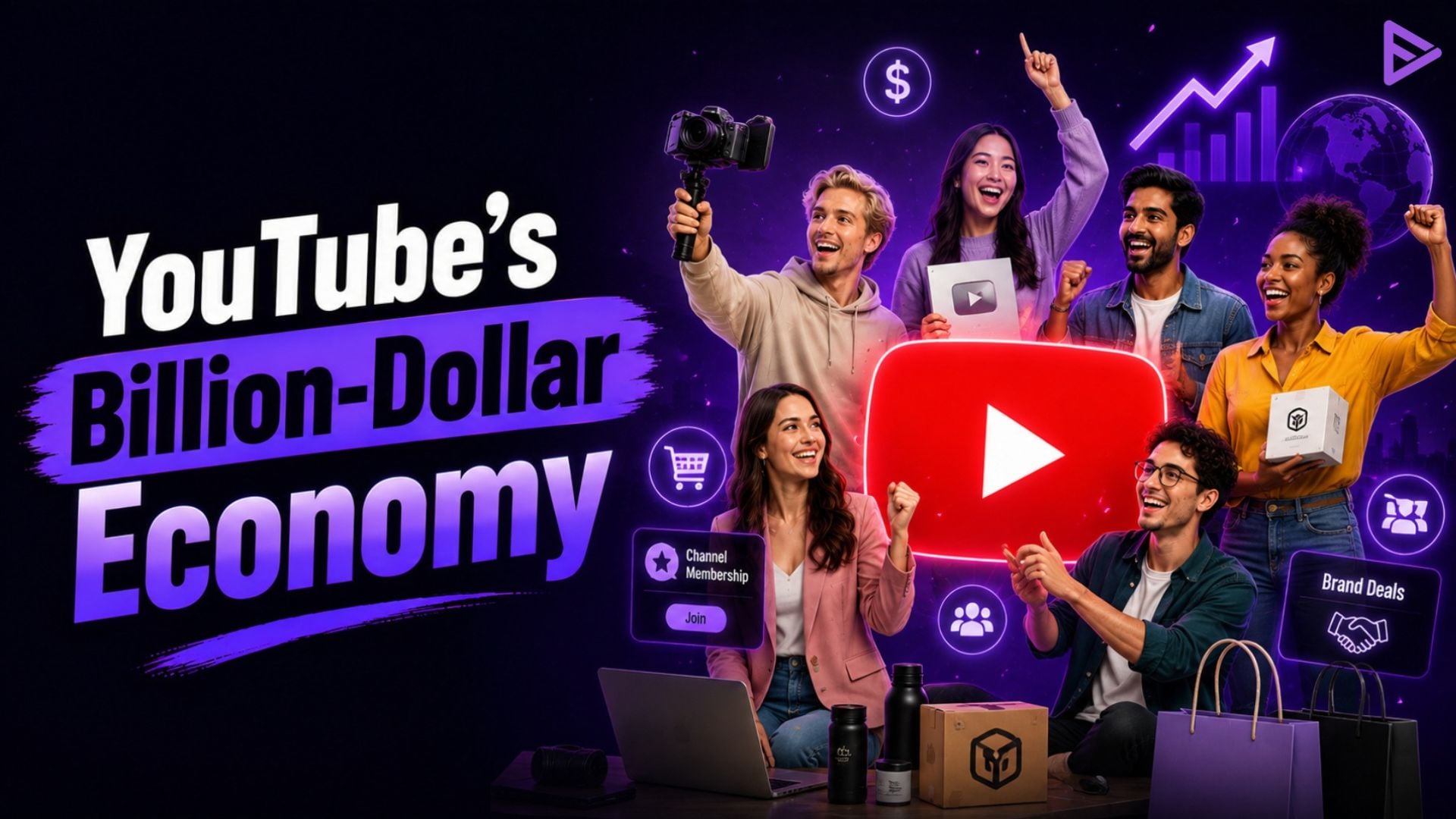
YouTube’s creator economy grew from the 2007 Partner Program into a global ecosystem supporting creators, businesses, and jobs. Revenue sharing gave creators a direct path to monetize audiences, while memberships, Shorts, shopping, and other tools expanded earning opportunities. Research from Oxford Economics highlights YouTube’s wider economic impact, showing how the platform evolved from a video-sharing site into a professional creator business ecosystem.
How YouTube Created a Billion-Dollar Creator Economy
YouTube turned normal people’s video uploads into actual careers by sharing advertising revenue with creators. The Partner Program, introduced in 2007, gave users a direct way to make money from their content. Over time, this form developed into a whole system that sustains jobs, businesses, and creative output all over the world.
“YouTube remains the original and largest creator economy. Creators call us home because we offer the most stable path to earn. “
— Neal Mohan, CEO, YouTube
How Did the YouTube Partner Program Build the Creator Economy?
Selected uploaders received a cut of ad revenue in December 2007 through the YouTube Partner Program, which ushered in today’s YouTube creator economy. Before that, nearly all the money from advertising went to the platform. Creators did not make anything from the views their videos got.
The initial program was invite-only. Later, it expanded further. Long-form content creators receive 55 percent of the revenue. This one little adjustment turned hobby videos into potential businesses. Many of the first partners remain active years later.
The Economic Impact of the YouTube Creator Economy Today
Oxford Economics’ research highlights the size of the YouTube creator economy. In 2024, the creative ecosystem generated $55 billion in GDP and employed 490,000 full-time workers. The following year’s numbers climbed even higher to over $60 billion in GDP and 540,000 jobs.
That’s including earnings for creators directly, but also broader activity they generate. Editors, managers, suppliers of gear, and local services all profit. Since 2021, total payouts to creators, artists, and media companies have exceeded $100 billion.
How Are Creator Economy Trends Shaping Up on the Platform?
In recent years, YouTube has seen a shift when it comes to the creator economy – from channel owners relying solely on advertising for income to setting up various revenue streams. Channel memberships, Super Chat, Super Thanks, merchandise shelf and shopping tools are now the alternatives to ad revenue. Many channels that earn more than five figures share that a good part of revenue comes from sources other than advertising.
Shorts introduced another pathway, with its own revenue model. Analytics tools evolved to enable creators to run their channels like small businesses. The end result is a more robust arrangement than relying on a single ad stream early.
Key Milestones in Building the Creator Economy
The creator economy didn’t materialize overnight. A wave of platform updates and monetization milestones turned YouTube from a video-sharing site into a viable business ecosystem for millions of creators.
|
Year / Period |
Milestone |
Impact |
| 2007 | Partner Program launches | First structured revenue share |
| 2012–2014 | Program opens more widely | Rapid growth in monetized channels |
| 2017–2018 | Eligibility thresholds raised | Focus on quality and sustainable creators |
| 2021–2025 | Cumulative payouts exceed $100 billion | Confirmed scale of the model |
| 2024–2025 | Oxford Economics impact reports | Measured GDP and job contributions |
Each one of these moves demonstrated that YouTube was professionalizing the opportunity rather than treating it as a side experiment.
How Revenue Sharing Changed the Creator Economy?
The practice of revenue sharing enabled creators to establish a direct relationship between the size of the audience and their income. With more hours of views and engagement, revenues increased. The incentive improved the quality of content production, regularity of uploads, and audience understanding.
Creativity allowed content makers to improve their videos and hire people for this purpose. Statistics from the Oxford Economics study reveal that a great number of people working in media and entertainment today began their careers on the platform.
How Can Creators Participate In This Ecosystem Now?
Anyone who meets the current Partner Program thresholds can apply. The minimum criteria are still 1,000 subscribers plus either 4,000 watch hours or 10 million Shorts views in a rolling 90-day period. After approval, creators have access to ads, memberships, and multiple other features. Creators gain access to ads, memberships, and more tools.
You still have to hustle to produce ahead of time what the audience wants to keep watching. You can also see from within the Analytics section of YouTube Studio which videos generate the most revenue, and which traffic sources are the best. Treating the channel like a small business remains the practical approach.
Final Thoughts
YouTube made a billion-dollar YouTube creator economy out of one fundamental thing: taking a share of the ad revenue generated and giving it to the people who made the videos. The Partner Program, along with tools and research conducted by Oxford Economics, confirms the magnitude of that decision. Creators are now running actual businesses, hiring staff and having quantifiable economic impact.
Most of the principles that formed the ecosystem still hold true. Concentrate on content that sustains attention, make use of the monetization options you have and check your results on a regular basis. Creators who want additional visibility support can check out the tools included within the VeeFly dashboard for compliant promotion solutions.
Frequently Asked Questions
Q1. When did YouTube start paying creators?
The Partner Program was launched in December 2007, providing the first formal revenue sharing.
Q2. How much of the ad revenue do creators get?
Creators get 55 percent of the revenue from ads on eligible long-form videos. Shorts use a different sharing model.
Q3. Are there sources of revenue besides advertising?
Yes. Eligible channels can earn additional revenue through features such as Memberships, Super Chat, Super Thanks, merchandise, and shopping.
Q4. Do small channels thrive in the creator economy?
Channels that meet the requirements for the Partners Program and begin earning. Growth still takes a steady stream of content that people want to watch.
Q5. How did the model evolve over time?
It evolved from being just ad revenue to multiple streams of revenue, to clearer analytics to allow creators to run sustainable operations.
