


Key Takeaways:
- Mainstream culture has not disappeared. It has become more fragmented and community-driven.
- 63% of people aged 14 to 29 surveyed say shared interests make them feel part of something bigger.
- YouTube creators and memes now have cultural recognition comparable to traditional entertainment.
- 77% associate YouTube creators with widespread interest, compared with 79% for Hollywood celebrities.
- Niche communities can become the starting point for mainstream cultural phenomena.
- 71% have watched videos exploring stories within a fandom or community.
- Fans are increasingly active participants, with 60% saying they feel proud because they believe they helped build the success of something they follow.
- YouTube plays a role not only in discovering culture but also in helping people understand and explore it.
What does it mean to be “mainstream” today? For decades, a relatively small group of television networks, film studios, music labels, celebrities, and publishers shaped mainstream culture. A hit movie, song or television show could become a shared reference almost overnight. The internet has changed that model.
People now follow highly specific interests, creators and communities. Yet this has not eliminated shared culture. Instead, it has changed how cultural moments are created and spread. New research from YouTube and NRG shows that today’s mainstream is increasingly shaped by creators, communities and audiences themselves.
Mainstream Culture Is More Fragmented, Not Gone
The internet has given people more control over what they watch and follow. Two people can have completely different online experiences while still finding common ground through a creator, meme, fandom or cultural moment.
The research found that 63% of people aged 14 to 29 surveyed feel that sharing interests with others makes them feel part of something bigger.
This points to an important shift. People still want shared experiences, but those experiences can now emerge from digital communities rather than traditional media alone.
What Makes an Online Trend Mainstream?
Not every viral post becomes part of mainstream culture. YouTube’s research identifies three factors that help explain why some ideas travel further: visibility, comprehension and participation.
- Visibility means people encounter the idea repeatedly.
- Comprehension means they understand the reference, even if they are not part of the original community.
- Participation happens when people comment, share, remix, create content or otherwise contribute to the conversation.
Together, these factors can turn a small internet trend into something much bigger.
Creators and Memes Are Becoming Cultural Influencers
Cultural recognition is no longer limited to movie stars, musicians and athletes.
Among respondents aged 14 to 29, 77% said YouTube creators seemed to be something lots of people were interested in, while 78% said the same about memes. For comparison, 79% chose Hollywood celebrities and 83% chose the Super Bowl.
The numbers do not suggest that creators have replaced traditional celebrities. Instead, they show how much the definition of cultural influence has expanded.
A creator can build a large audience directly, while memes can travel rapidly between communities and platforms.
Why Niche Communities Matter
“Niche” no longer necessarily means small or insignificant. Online communities can develop their own stories, language and creative traditions before attracting people outside the group. YouTube and NRG found that 71% of respondents had watched videos exploring stories within a particular fandom or community, while 69% had watched content from a community they considered niche.
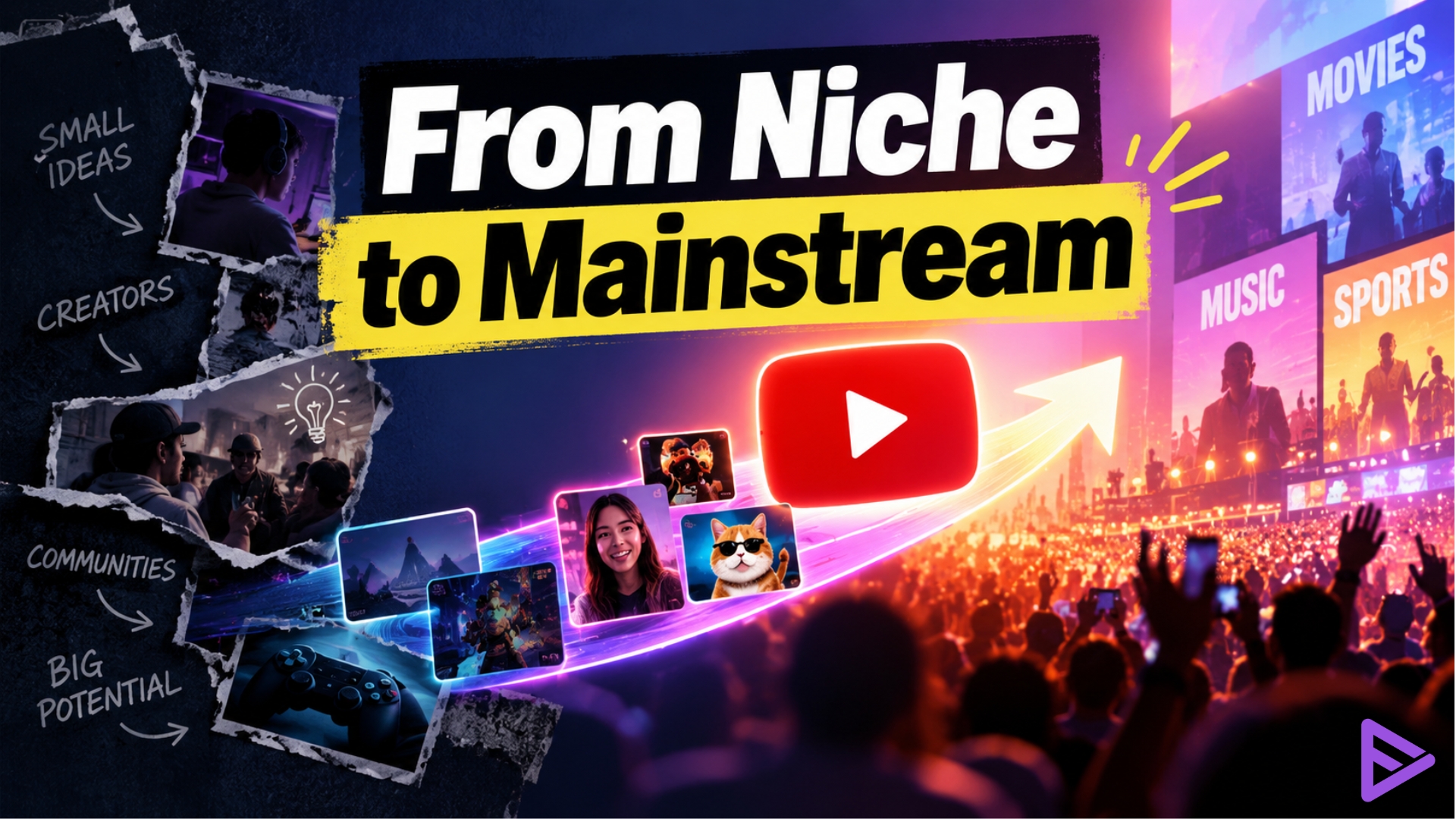
This creates a new path for cultural ideas: Niche community → creator involvement → wider curiosity → mainstream recognition
The process can start without traditional media.
The Backrooms: A Niche Idea Goes Mainstream
The Backrooms is a strong example of this shift. What began as an unsettling image grew through online communities that created stories, theories and interpretations around the concept.
Creator Kane Parsons, known as KanePixels, developed the idea into a found-footage YouTube series. Its first short reached more than 90 million views globally, according to YouTube’s research.
The concept eventually moved into theatrical entertainment through an A24 film adaptation, which opened with $118 million globally. Parsons also became the youngest director to top the global box office, according to the report.
The significance goes beyond the box-office result. An idea that developed within internet culture had successfully crossed into mainstream entertainment.
Audiences Are Becoming Part of the Success
Modern fandom is increasingly participatory. Fans can share a creator’s work, introduce new audiences, contribute ideas and keep conversations alive. As a result, they can feel personally connected to the success of the things they follow.
The research found that 63% of fans feel successful when the person or thing they support succeeds, while 60% feel proud because they believe they actively helped build that success.
That is a very different relationship from simply watching a finished product.
YouTube’s Role Goes Beyond Discovery
People may discover a trend anywhere online, but understanding it often requires more context.
YouTube has become an important space for that deeper exploration. Explainers, commentary, documentaries, fan theories and creator-led discussions can give audiences the background needed to understand a cultural phenomenon.
The research found that 65% of respondents aged 14 to 44 said something feels more real or legitimate when they see it on YouTube. Also, 73% said YouTube is the best place to explore their personal interests in depth, while 72% said it helps them stay interested in things after they first discover them.
That makes YouTube more than a discovery platform. It can also become a place where cultural relevance is explained, discussed and reinforced.
What Is the Future of Mainstream Culture?
The next mainstream phenomenon may not begin with a major studio, record label or television network. It could start with a creator, a meme, a gaming community, a fandom or an obscure piece of internet culture.
Traditional entertainment still has enormous influence, but it no longer controls what becomes culturally significant. The process is now more decentralised and participatory. Audiences can discover an idea, give it momentum and help shape what it becomes.
Final Thoughts
Modern mainstream culture is not disappearing. It is being built differently. Creators have direct relationships with audiences. Niche communities can influence wider culture. Fans can actively contribute to the success of the things they care about.
The research makes one thing clear: cultural influence is no longer determined only by how many people see something. It is also about whether people understand it, participate in it and feel connected to it. That is why the next major cultural phenomenon could come from almost anywhere online. The mainstream is no longer just something people consume. Increasingly, they help create it.
