


Key Takeaways
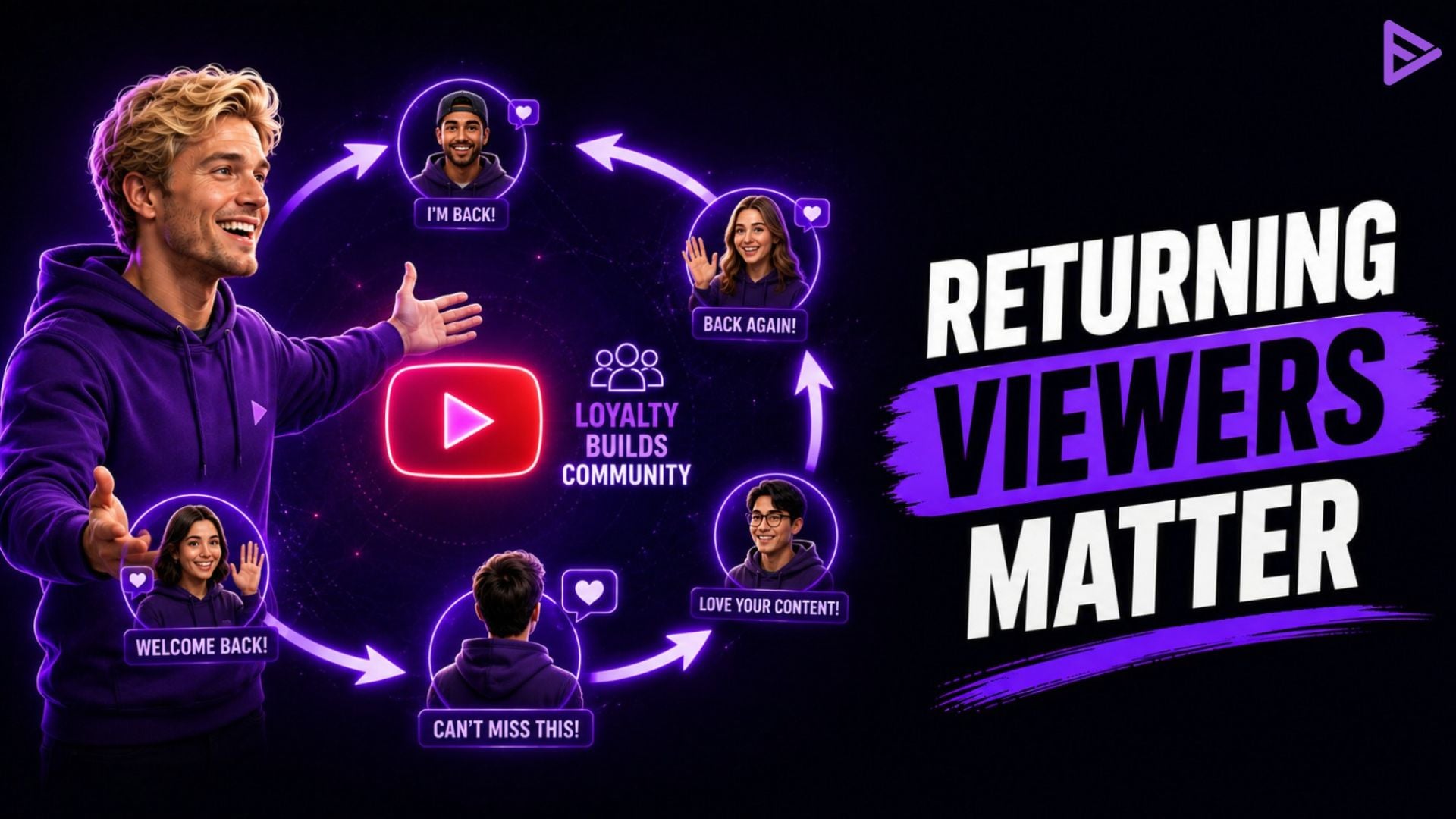
- Returning/YouTube viewers indicate that those who stumbled upon your channel decided to come back and watch it again.
- Returning viewers differ from subscribers because subscribing doesn’t mean that the person is definitely coming back.
- YouTube distinguishes between new, casual, and regular visitors in Analytics.
- YouTube says viewers who regularly return are more likely to receive recommendations for additional videos from a channel.
- Repeated topics, consistent formats, and content series can encourage repeat viewing.
- Return viewer figures are more valuable when compared with audience retention, watch time, unique viewers, and new viewers.
- Paid promotion can boost discovery, but it’s compelling content and audience relevance that make people come back.
How YouTube Rewards Returning Viewers: The Loyalty Advantage
YouTube returning viewers are users who visit your channel page or have previously watched a video from your channel, and they come back to watch more of your content. According to YouTube, the platform does not take returning viewers into account as an individual ranking factor. However, it does say that viewers who return to a channel frequently are more likely to be recommended more videos from that channel. For creators, audience repeatability is therefore a crucial element of sustainable YouTube growth.
Returning Viewers On YouTube Meaning
The returning viewers YouTube meaning refers to viewers who have previously watched your channel and come back to watch more during the selected reporting period. YouTube Analytics separates returning viewers from new viewers, and its Audience tab also divides viewers into newcomers, casual, and regular viewers.
A user can watch many videos without subscribing, and a subscriber may not bother to watch your next upload. YouTube now advises creators to identify their active audience rather than simply using subscriber numbers.
YouTube regular viewers are defined as individuals who have watched a particular channel at least once in a six-month time period over the past 12 months. Casual viewers consumed the content at least once a month for a period of one to five months during the time span.
For creators, returning viewers YouTube data can help determine a practical question: Did your previous viewers find enough value to come back?
Does YouTube Directly Reward Returning Viewers?
YouTube doesn’t say that returning viewers get a direct ranking boost, but it does say that channels with repeat viewers are recommended other videos from that channel more frequently. YouTube adds that this also means that “audience segments” do not impact reach and monetization in a direct manner. This is an important distinction to make when describing how the YouTube algorithm works.
A better model is:
Relevant content → viewer satisfaction → repeat viewing → stronger audience relationship → more opportunities for relevant recommendations
The algorithm is viewer-centric as opposed to a simple channel score. When people keep picking videos from a particular channel, that signals to YouTube that the content might be relevant to those viewers again.
So, creators should not chase some specific percentage of returning viewers. Instead, they need to figure out what makes folks come back.
How Can Creators Build a Larger Base of Returning Viewers on YouTube?
Creators can grow returning viewers on YouTube by having consistent content, recognizable formats, related video series, and foregrounding the pitches for why a viewer should keep coming back. YouTube particularly suggests consistency, series, interacting with audiences, and making more videos around topics that really spark the interest of an audience.
Formulate a Content Guarantee That Can Be Recognizable
Your audience will have an idea of what to expect from your channel in the first five seconds. For instance, a technology creator might establish a niche in concise how-tos, and a gaming creator might experiment with recurring challenges. A business channel might release weekly videos explaining aspects of entrepreneurship and marketing. The structure can change, but the core value proposition needs to be obvious.
Turn Successful Topics Into Series
A successful video should not always be treated as a one-time opportunity.
Creators can develop:
- Follow-up tutorials
- Part two videos
- Beginner and advanced guides
- Comparisons
- Case studies
- Updated versions
- Viewer-requested topics
- Series
Create Connections Between Videos
Utilize playlists, end screens, and cards when appropriate and related content to support next-viewing decisions.
According to Rene Ritchie, Creator Liaison, YouTube, “We care so much more about the watch time than just the click-through rate, because that means you’re actually delivering on the promise… That creates stickiness, it creates returning viewers, it creates a real connection.”
When someone watches a tutorial for beginners, the next video could address an intermediate question. This creates a content flow rather than dropping viewers at a single video.
What Are Some Good YouTube Analytics For Returning Viewers?
Return viewers are important to consider along with new viewers, regular viewers, audience retention, watch time, and unique viewers because your overall health can’t be gleaned from a single stat. YouTube’s Analytics tools provide different audience and performance measurements that help creators understand how people discover and consume their content.
|
Metric |
What it tells creators |
| Returning viewers | Whether previous viewers came back |
| New viewers | Whether content is reaching fresh audiences |
| Casual viewers | Whether occasional viewers are coming back periodically |
| Regular viewers | Whether repeat viewing has become consistent |
| Unique viewers | The estimated number of individual viewers reached |
| Audience retention | Where viewers continue or stop watching |
| Watch time | How much time viewers spend watching content |
For example, if a video draws a lot of new viewers but few return to watch additional videos, then it potentially has strong discovery appeal, but it does not provide a strong incentive to look at other videos on the channel. If a different video draws users who are both new and existing, then it could be a stronger candidate for a series or sequel.
Final Thoughts
Returning viewers on YouTube is best interpreted as a signal of loyalty rather than a reward from the algorithm. YouTube’s own guidance says regular returning viewers are more likely to be recommended more content from that channel, but it does not list returning viewers as a separate ranking factor.
The target for any creator is to craft content that people want to come back to. Creators looking to support the discovery part of their strategy can now use VeeFly to analyze promotional performance against audience activity in YouTube Studio.
Frequently Asked Questions
Q1. Is “returning viewers” a YouTube ranking factor?
No, YouTube does not treat returning viewers as a separate ranking factor. However, it does say that “viewers who regularly return” are more likely to be recommended other content from that channel.
Q2. Are returning viewers the same as subscribers?
No. Returning viewers are a measure of viewing behavior, and subscribers are people who have chosen to subscribe. A subscriber doesn’t have to watch every upload, and a returning viewer doesn’t have to be subscribed.
Q3. Why are my regular viewers less than my subscribers?
Regular viewers have a much higher threshold of consistency. YouTube considers them as watchers who have watched at least once a month for more than six months in the last year.
Q4. Should I be focusing on the returning viewers or the new viewers?
Both. New viewers are a good indication of growth potential for your channel; returning or consistently viewing fans mean your current audience is still finding value in your content. A sustainable channel strategy needs both discovery and loyalty.
