


Key Takeaways
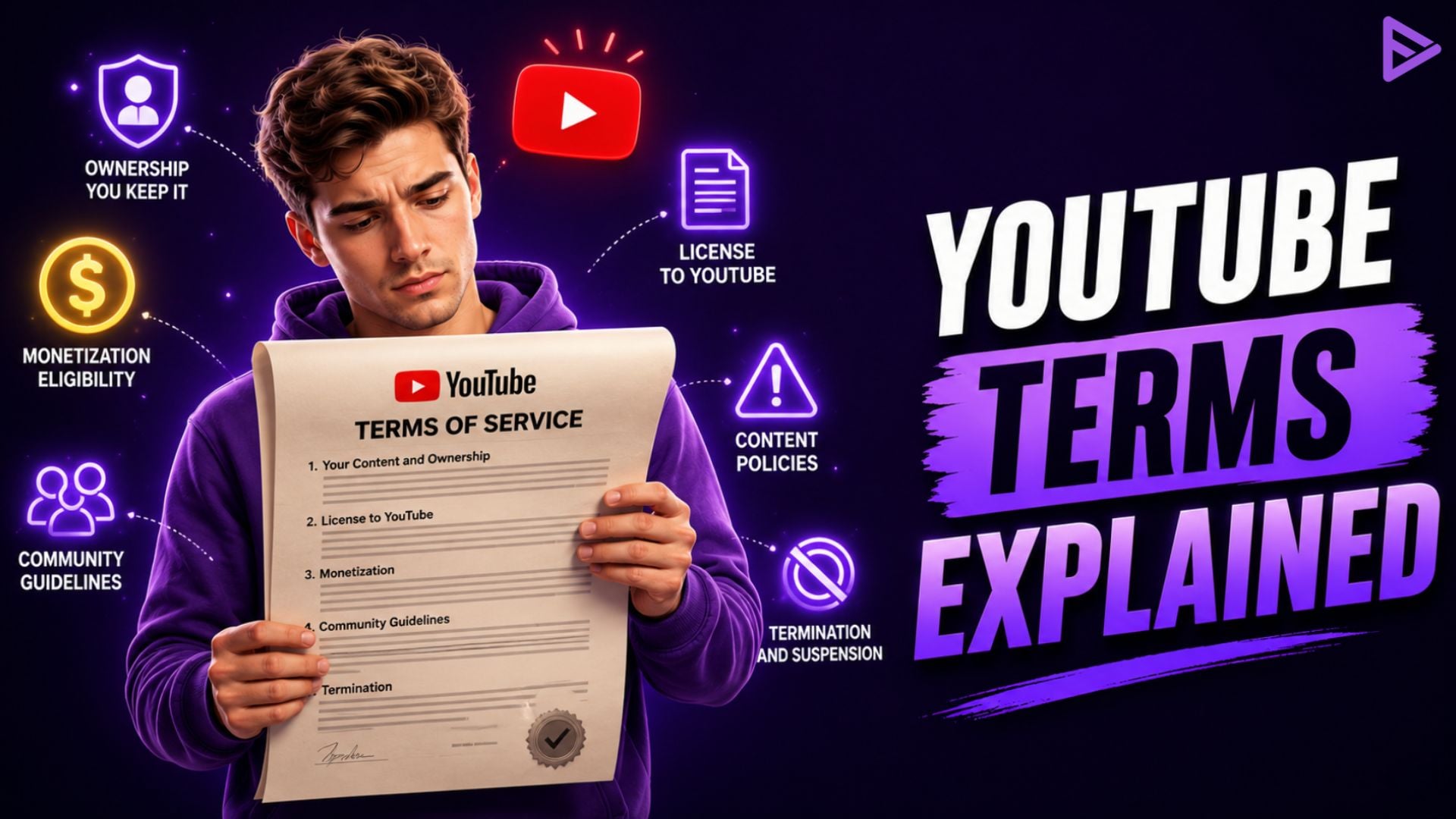
- Under YouTube’s Terms of Service for creators, creators own their original content outright.
- Uploading content to YouTube gives YouTube a broad, royalty-free license to use the content on its services.
- YouTube can place ads on uploaded content, but payments are tied to separate Partner Program agreements.
- Content that is non-authentic, spammy or generated by AI in certain ways isn’t allowed to make money.
- Videos, titles, descriptions, and channel information are subject to our Community Guidelines.
- Violations may result in demonetization, limited features, or termination of the entire channel.
YouTube Terms of Service for Creators: What You’re Really Agreeing To!
Uploading content to YouTube is an agreement to the contract, granting YouTube rights to host, display, promote, and monetize your videos while you retain ownership of your videos. The YouTube Terms of Service for creators also include terms on authenticity, community standards, and account integrity, which have a direct impact on whether revenue can be generated. Understanding these terms before you publish helps you avoid policy violations, protect your channel, and build a sustainable presence on the platform.
What Ownership Rights Do Creators Actually Keep For Their YouTube Videos?
YouTube’s terms of service for creators confirm that you retain all ownership rights in the content you upload. The site does not take copyright on your videos, music, or other original works. You are still free to license that content elsewhere, to delete it from YouTube, or to do whatever else you want with it commercially.
The ownership question is significant because many assume that by uploading, they are transferring rights. The deal just requires a license for YouTube to run the service.
According to the current YouTube Terms of Service, “You retain all of your ownership rights in your Content. In short, what belongs to you stays yours.”
What License Do Content Creators Grant To YouTube?
When you submit content to the platform, you grant YouTube a worldwide, non-exclusive, royalty-free, sublicensable, and transferable license. This license permits YouTube to copy, distribute, create derivative works of, publicly perform, host, and utilize the content to operate, promote, and enhance the Service and our business-related activities.
The license is broad enough to accommodate recommendations, embeds, technical copying for different devices, and advertising. YouTube may also keep server copies of deleted videos for a limited period of time, but they will not be published. Creators are unable to expand or retract the license for content that has already been processed and is live on the platform under regular functioning.
How Does Monetization Work With the Terms?
The YouTube creator terms of service grant YouTube the right to make money from the content you upload through advertising, paid access, or other means. The Terms of Service do not entitle the creator to any compensation either. Revenue share is only available under separate agreements, for example, the YouTube Partner Program, Channel Memberships, or Super Chat.
“Creators should understand that uploading to YouTube does not transfer ownership of their work. Instead, it grants YouTube the license necessary to distribute, recommend, and operate the service while copyright remains with the creator.“
- Rene Ritchie, Creator Liaison, YouTube effective from late 2020, any payments under those agreements are taxed as royalties. Before they can be monetized, creators must also have the necessary commercial rights to everything in their videos, including any music, footage, and trademarks. If those rights are not cleared, it may lead to claims, limiting ads or even demonetization completely.
What Is On the List of Inauthentic Content in 2026?
YouTube made its longstanding policy about what types of content could be monetized more explicit. The previous “inauthentic content” category has now been split into three distinct categories. The first comprises generic or repetitive template-based content. The second consists of unfulfilling or disgusting content, often created to elicit emotional responses; primarily, it is to provoke. The third is AI-generated personas that provide advice on sensitive topics such as health, finance, or legal issues.
| Content Type | Monetization Status | Key Risk Factor |
| Original, transformative work | Eligible | Strong creator perspective or value |
| Generic/repetitive templates | Not eligible | Mass-produced feel, little variation |
| Off-putting or distressing | Not eligible | Manipulative emotional hooks |
| AI personas on sensitive topics | Not eligible | Misleading expertise on health/finance |
| Commentary or reaction with significant original input | Eligible | Added value beyond the source material |
As of statements from YouTube’s Trust & Safety leadership in July 2026, these clarifications do not impound potential new rules. These are just simpler ways for creators to understand the standards we already have. Channels with a high percentage of this content can be penalized by having their revenue share gated or by losing eligibility altogether, even if their individual videos follow Community Guidelines.
How Do Creators Get Affected by Community Guidelines and Account Rules?
The Community Guidelines are incorporated into the YouTube Terms of Service for content creators as enforceable rules. These rules apply to all content on the platform: video titles, descriptions, thumbnails, comments, and channels about sections. A 2026 enforcement update announced that non-compliant channel descriptions may be hidden until fixed.
What Happens When Creators Promote Off-Platform Content?
Hundreds of creators run external advertising campaigns to boost growth. Any revenue traffic must also comply with YouTube’s Rules of Engagement and Authenticity. These are the best services to get real viewers on your videos. Fake metrics violate the Terms of Service and may lead to audits. Services that provide real viewers via compliant advertising networks, such as those found in the VeeFly dashboard, keep traffic sources clean as creators test titles and descriptions for policy compliance.
Final Thoughts
The YouTube terms of service for creators is a pretty simple tradeoff: You keep ownership of your work, you grant the platform the licenses needed to operate and promote the service, and you abide by authenticity and community standards, and that’s in exchange for distribution and potential revenue. Reading the full terms, along with the linked Community Guidelines, once a year remains one of the highest-leverage habits a creator can adopt.
Keep up with clarifications of policy, focus on original value in every upload, and apply compliant promotional strategies in the pursuit of reach. You can check the compliance status of your channel within YouTube Studio, and aligning your content strategy with the most up-to-date definitions of authenticity will help minimize your risk of abrupt growth or revenue interruptions.
Frequently Asked Questions
Q1. Do I lose my rights to my videos if I upload them on YouTube?
No. Creators maintain complete ownership rights. YouTube is granted a license to use the content in connection with the operation of, and promotion of, the service.
Q2. Can YouTube monetize my videos without paying me?
Yes. The Terms of Service provide YouTube with the right to monetize content. Payouts require a separate Partner Program or similar contract.
Q3. Is AI Content prohibited in the TOS?
No. AI-generated content is not prohibited under the TOS, as long as the final content is original, authentic, and provides value. However, mass-produced generic content, repetitive AI-generated material, or AI characters providing sensitive advice may not be allowed.
Q4. What will happen if I get my channel terminated?
You are generally not allowed to create, manage, or be featured on any other YouTube channels. Appeals processes exist, but there is no guarantee your channel will be restored.
Q5. Do Community Guidelines apply to my channel description?
Yes. Since the May 2026 update, channel descriptions are required to follow the same Community Guidelines as videos. Non-compliant text can be hidden.
