


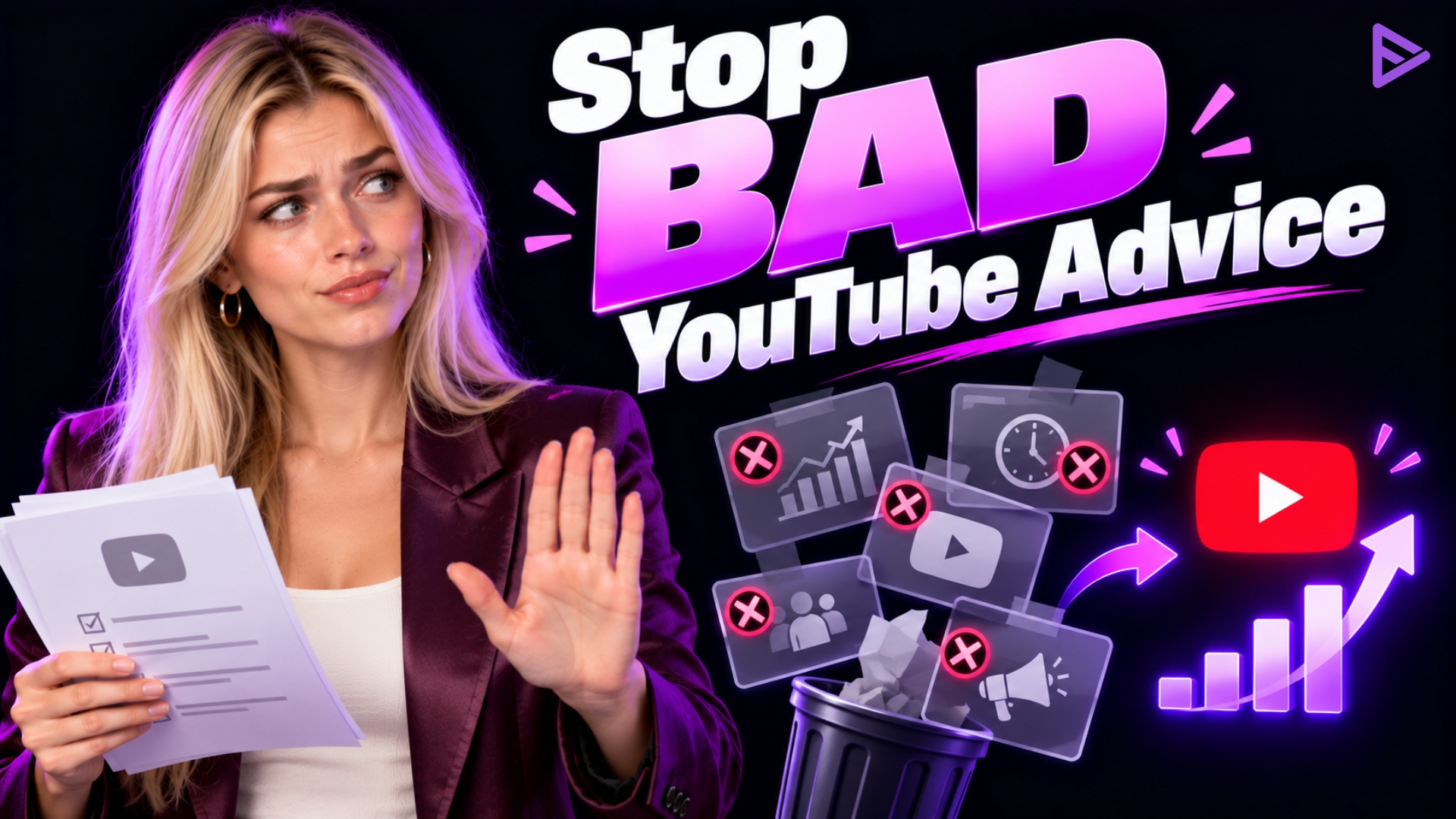
Key Takeaways:
- Prioritise Watch Time Over Volume: Bulk-uploading generic videos can hurt watch time, while prioritising engagement helps.
- YouTube is not an algorithm game: YouTube’s recommendation algorithm favours real viewing time, not manipulation.
- Multiply the revenue streams: Use YouTube shopping, Super Thanks and fan funding early on – not just standard ads.
Following outdated YouTube tips can hinder your channel’s growth, reduce retention, and even trigger algorithmic penalties. In 2026, success means shifting from old growth tactics to prioritising viewer satisfaction, original value, and authentic audience connection. Discover what old tactics you should drop in order to create a successful and loyal YouTube following.
What are the Outdated YouTube Advices in 2026?
Old YouTube tips involve strategies that were effective with previous algorithms, but are now advice for new YouTubers, harmful to reach, revenue, or retention. Legacy practices such as tag spamming, chasing trends, and sub-for-sub trading are actively damaging a creator’s channel health as they are prioritized for satisfaction and viewer return.
| Outdated YouTube Advice | Modern Best Practice | Algorithmic Impact |
| Bulk Posting Daily | Sustainable, quality-focused schedule | Safeguards viewers’ attention and CTR |
| Excessive Tagging | The titles are optimized for the search engine and use strategic metadata. | Does not use deceitful practice flags |
| Sub4Sub / Mutual Likes | Organic growth & targeted promotion | Prevents channel termination |
| Every Viral Trend Chasing | Niche authority & value-driven content | Establishes a strong, loyal customer base |
Bulk Posting
You might think posting videos every day or weekly will increase your chances of an algorithmic boost, and you will be more visible. In contrast, the tactic is going in reverse.
Since the rise of AI tools, many creators have started bulk uploading content. Mostly low-quality videos that don’t provide any value to viewers. The algorithm is prioritising engagement over volume. Videos should resonate with the audience and boost watch time.
Long story short, the videos should be authentic to bring engagement. Even if you are producing Shorts. The video should be relevant for viewers and add value to their content consumption.
“The YouTube algorithm doesn’t pay attention to the number of videos you upload each week; it pays attention to the value that each video brings to the human consumer that watches it.” – MrBeast, YouTube Creator.
Mimicking Top YouTubers
Copying top creators can seem like a quick way to earn a living, but it is a double-edged sword. One piece of advice for new YouTubers is to find their own voice early on instead of following in the footsteps of popular YouTubers. For viewers, if they discover you are copying someone, they lose interest, bounce, and retention rates drop.
About Yourself
When you create a YouTube channel, you have to introduce yourself. You can even add a channel trailer. But it is not advisable to talk about yourself in every video.
Instead, focus on delivering what you have promised in the title. Viewers are more likely to subscribe if you give them what they came for rather than trying to persuade them to subscribe.
Creating a Separate Channel
Even top YouTubers often create a separate channel for uploading Shorts or other videos. However, YouTube recommends content based on people’s interests. YouTube identifies and recommends Shorts and long-form videos to the right users.
You can create a separate channel if you are targeting a totally different audience. Let’s say you are a tech channel and want to talk about coffee; then a separate channel is a must. Nonetheless, if you are a tech channel and creating a day-in-the-life video, tech news(Shorts), YouTube business or a studio tour, it can be uploaded on the same channel.
Multiple YouTube Tags
Tags help people find your videos. But adding too many tags can violate YouTube guidelines. YouTube may flag the content as spam or deceptive. Tags contribute very little to content discovery; the title, thumbnail, and description matter more.
Tags were once considered necessary for YouTube SEO, but content visibility depends on many factors; tags are the least important, so use them for the right keyword and don’t over-optimise.
Instead of cluttering metadata, creators who need optimal titles and tags should use targeted tools like the VeeFly AI Title Generator and Tag Extractor to keep metadata clean and relevant without violating spam guidelines.
Appear in YouTube Search Results
Optimising videos to appear in YouTube search results is outdated. The videos need to appear in a relevant spot. For instance, most Google search queries are solved in an AI overview. Your video clips appear in the search results overview.
Additionally, most channels are discovered through suggestions. Optimise your channel by creating a playlist, adding videos to end screens, and using the “I” button. You can now see your videos in the Explore tab(Music, Learn, Podcast, Sports, Courses).
This is only for direct traffic. To boost your presence, you can promote your channel through YouTube advertising and social media. Tubefilter reports that more than 70% of viewing time on the platform is spent on the algorithmic recommendation system (Suggested Videos and Home Screen), rather than manual search queries.
Being in Trendy
Following the latest fads and current trends is a short-term strategy that can provide only short-term results. The key takeaway from the best advice on YouTube growth tips is that it’s not about going viral for a quick hit, but about building lasting niche authority.
Trying to Impress the YouTube Algorithm
Many creators make videos for the algorithm and not for viewers. Creators aim to earn from YouTube, but providing value to the audience should come first. YouTube’s algorithm can detect this practice and even flag the channel.
Understand your audience, and tapping into the algorithm becomes easier. The videos will reach their intended audience and appear in recommendations and search results.
Aiming for the YouTube Partner Program
Traditionally, the primary source of income on YouTube was ad revenue. To earn from ads, you need to be eligible for YPP. The landscape has changed; you can earn through YouTube shopping features, merchandise, brand deals, Super Chats, members-only content, YouTube Premium audiences, and affiliates.
Some of these features are easy to access; you just need to verify your account or reach 5oo YouTube subscribers. Compared to YPP, this is easier to achieve and helps you earn early. The best YouTube advice for beginners is to diversify your income sources as early as possible, not just from ads.
Barter of Artificial Engagement(Sub4Sub, Like-for-Like)
Not many creators use this, but some who are having difficulty growing their channels still fall for these tactics. You’ve probably seen users in the comments section pleading to subscribe to your channel in return for subscribing.
The same goes for views and likes. Although this manual labour works, it falls under artificial boosting, which can get your channel blacklisted. It violates YouTube’s Terms of Service.
Why Should You Know Outdated YouTube Advice?
Knowing outdated advice for YouTubers helps you stay up to date with YouTube updates and avoid wasting time on ineffective tactics. Internal platform metrics show that channels that build their subscriber base organically and through legitimate promotional methods have 3x more subscribers after 12 months than channels that grow artificially.
To accelerate channel growth, creators use various tactics. Most of these tactics quickly become outdated and do more harm than good. Rely on understanding your audience and the platform itself.
You can develop your own strategies and learn from the best YouTubers in your niche, but make sure they are relevant and adhere to YouTube guidelines. Educate yourself so that you know when to stop using outdated YouTube advice.
Final Thoughts
Following outdated YouTube advice and practices can break your channel, and it will take longer to regrow it. In this blog, we’ve discussed ten pieces of YouTube advice that are not relevant in 2026. You can work on YouTube automation channel ideas to increase video quality and quantity without compromising your authenticity.
Frequently Asked Questions
Q1. Does outdated YouTube advice lower your views?
Yes, YouTube’s algorithm is constantly upgrading. The strategies and advice that once worked can now hurt channel performance.
Q2. What’s working instead of outdated YouTube advice?
Using strategic posting based on Studio analytics data, leveraging AI tools, working on audience retention, staying relevant to the niche, covering old but popular topics, utilising Shorts, and not over-optimising.
Q3. What is outdated YouTube channel advice?
Posting daily, posting without a schedule, using too many hashtags, a separate channel for Shorts, and uploading for the algorithm, not the audience.
Q4. Do YouTube algorithm hacks work?
Algorithm tweaking can give you a boost, but such practices fall under artificial boosting, which violates YouTube’s terms of service and gets your channel flagged.