


Key Takeaways
- Fair use on YouTube is tied to a legal concept, where one may use copyrighted content in certain scenarios (subject to conditions) without requiring the copyright owner’s permission.
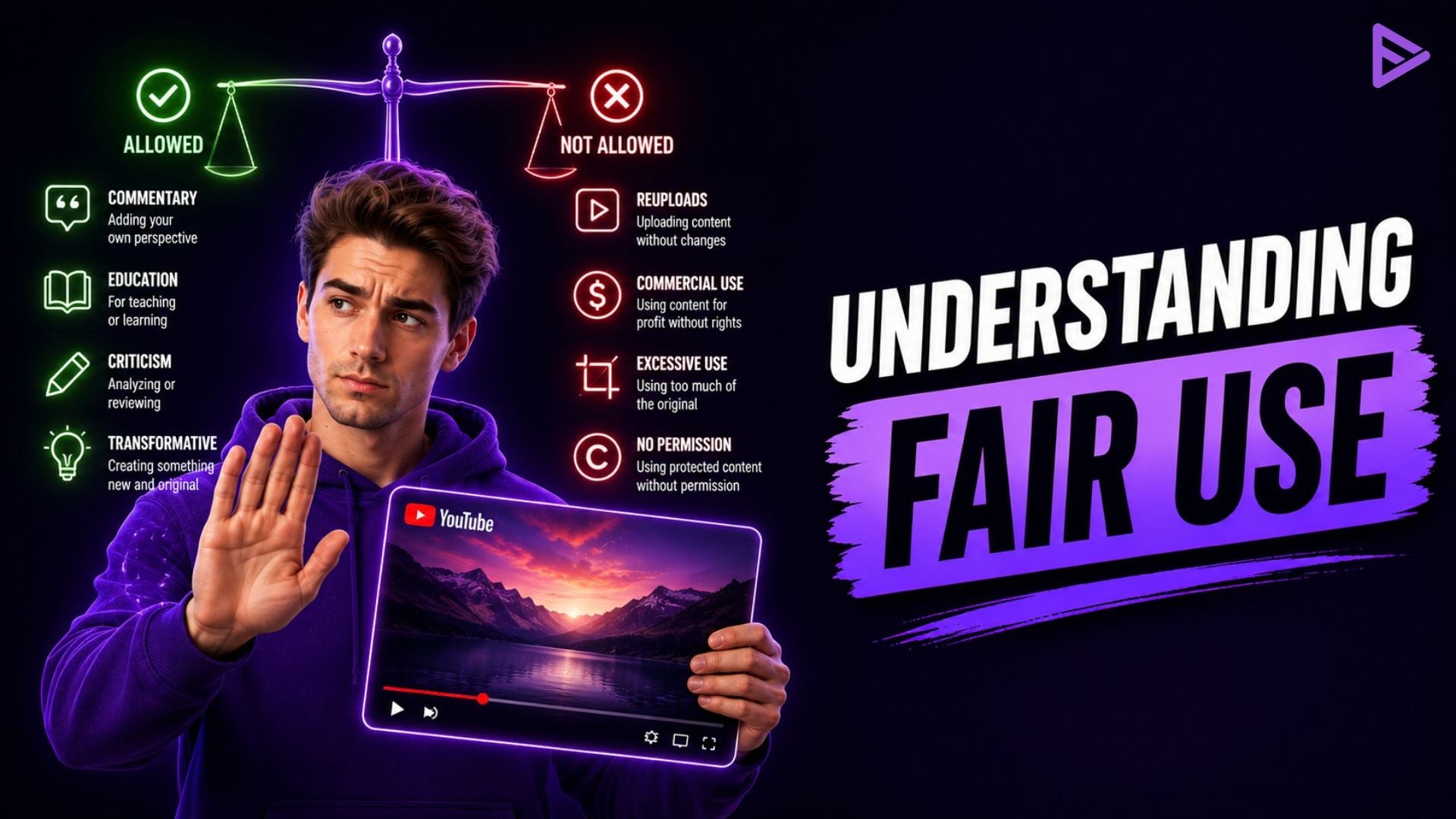
- Some examples include teaching, commentary, news reporting, research, transformative analysis, and more.
- YouTube does not make any final legal decisions regarding fair use like the courts. It asks copyright owners to consider exceptions before submitting requests for removal.
Fair use on YouTube is based on US copyright law, where someone may use copyrighted content in specific circumstances without requiring permission from the copyright owner. It depends on how the copyrighted material is used, how much it is utilized, the original work, whether the use impacts the market for the original creation, and so on. It may support some activities, including commentary, criticism, education, news reporting, parody, research, transformative analysis, etc.
Fair Use on YouTube Explained for Creators
The concept of fair use is based on US copyright law, permitting one to use copyrighted content under specific conditions without requiring permission from the copyright owner. However, it depends on several factors, including the nature of the work, whether the use is transformative in nature, how the use impacts the market for the original work, etc. Simply giving credit, using short clips, or putting disclaimers will not make any video fair use.
What is Far Use on YouTube?
Here is a brief round-up of what fair use on YouTube means:
|
When Fair Use is Recognized as an Exception
|
Criticism, education, research, transformative analysis, commentary, news reporting, etc.
|
|
What May Not Count as Free Use
|
What some creators mistakenly think- giving credit, using just a few seconds, adding commentary or not monetizing the video.
|
|
How a Video Qualifies for Fair Use
|
Depends on the law, the facts, and the specific use case for each video.
|
|
What YouTube Thinks
|
YouTube does not make final legal decisions regarding fair use. It only asks copyright owners to consider any exceptions before submitting their removal requests.
If no explanation is submitted as to why the exception does not apply, the video may not be removed.
|
Main Fair Use Factors for YouTube Creators
How does fair use work on YouTube? To understand this better, it is vital to analyze the key factors in this regard. They include:
- Purpose & Character of the Use: This means the how and why of using the copyrighted material. A transformative use means adding new messaging, meanings, commentary, context, or purpose. Adding a new expression or meaning to the original content is also likely to be fair rather than just copying it.
- Nature of the Copyrighted Work: This also influences the concept of fair use on YouTube. If you use factual material, it may support fair use better than more creative material. So, movies, television shows, dramatic content and art are in the latter category, which may make fair use tougher.
- Amount & Substantiality Used: It covers how much you used from the original work/content and also whether you used the most vital parts. Using less may be helpful, although short uses may still be excessive in case they get to the actual heart of the content.
- Effect on the Market: Another aspect influencing fair use on YouTube is the impact on the market. It will perceive whether your usage swaps the original or negatively affects the market for the same. Fair use becomes tougher if viewers may use your video instead of the original content. So, to cite an instance, uploading a full music track with negligible commentary will be risky, since the video may swap for the original song in viewers’ feeds.
How Transformative Use Can Make Your Fair Use Argument Stronger
Based on YouTube fair use guidelines, transformative use is one of the biggest ideas for enhancing the chances of fair use as a creator. So, some of these uses may include the following:
- Analyzing any particular scene or part.
- Criticizing any argument or concept.
- Explaining how something was created.
- Comparing the sources.
- Parodying the original.
- Adding more educational or helpful content.
- Reporting any news about the work in question.
Common Myths on Fair Use
Some common myths related to fair use on YouTube need to be debunked if you’re a creator. Simply giving credit does not make it a fair use and the same holds true for using any content for shorter timeframes. Not using monetization, disclaimers, or reaction videos- they all cannot automatically count as fair use. Let us look at them in more detail below:
|
Myth
|
Why Avoid
|
|
Giving credit will make it a fair use
|
Credit may be the right thing to do ethically, but it does not create any permission and does not make any use legal automatically |
| Using anything less than 10 seconds is always fair and safe | There is no such universal safe number of seconds and shorter clips may still infringe upon copyright |
| No monetization equates to fair use | Non-commercial use may help, but does not automatically ensure fair use |
| A disclaimer is all that is needed | No copyright intended and other disclaimers do not create rights automatically |
| Reaction videos are always fair use | Some may be, while others may not. It depends on how much you use and whether the reaction adds any transformation. |
Final Thoughts
Understanding fair use on YouTube is essential as a creator. You should use only what you require, while adding something transformative, including real commentary, education, or criticism. Transforming the meaning/purpose is vital, while avoiding copyrighted material like decorations and images. For more views, effective promotions, and better reach, you can consider VeeFly for the best strategies.
Frequently Asked Questions
Q1. Does YouTube decide on fair use?
YouTube may review the copyright process, but does not make final legal decisions on fair use.
Q2. Is it enough to give credit for fair use?
No, it is not enough, since giving credit will not create fair use automatically.
Q3. Is it okay for fair use if I use a shorter clip?
No, there is no universally regarded safe number of seconds. Short clips may still infringe copyright.
Q4. Can music be used under fair use?
Sometimes it can be, although background music is always a weaker bet, while criticism or analysis is stronger.
Q5. What happens if there is a Content ID claim?
You may dispute the same if you have a valid basis for fair use, with an understanding of the risks.
