


Key Takeaways
- YouTube search ranking factors are relevance, engagement, and quality.
- Strong relevance starts with understanding what the viewer actually wants.
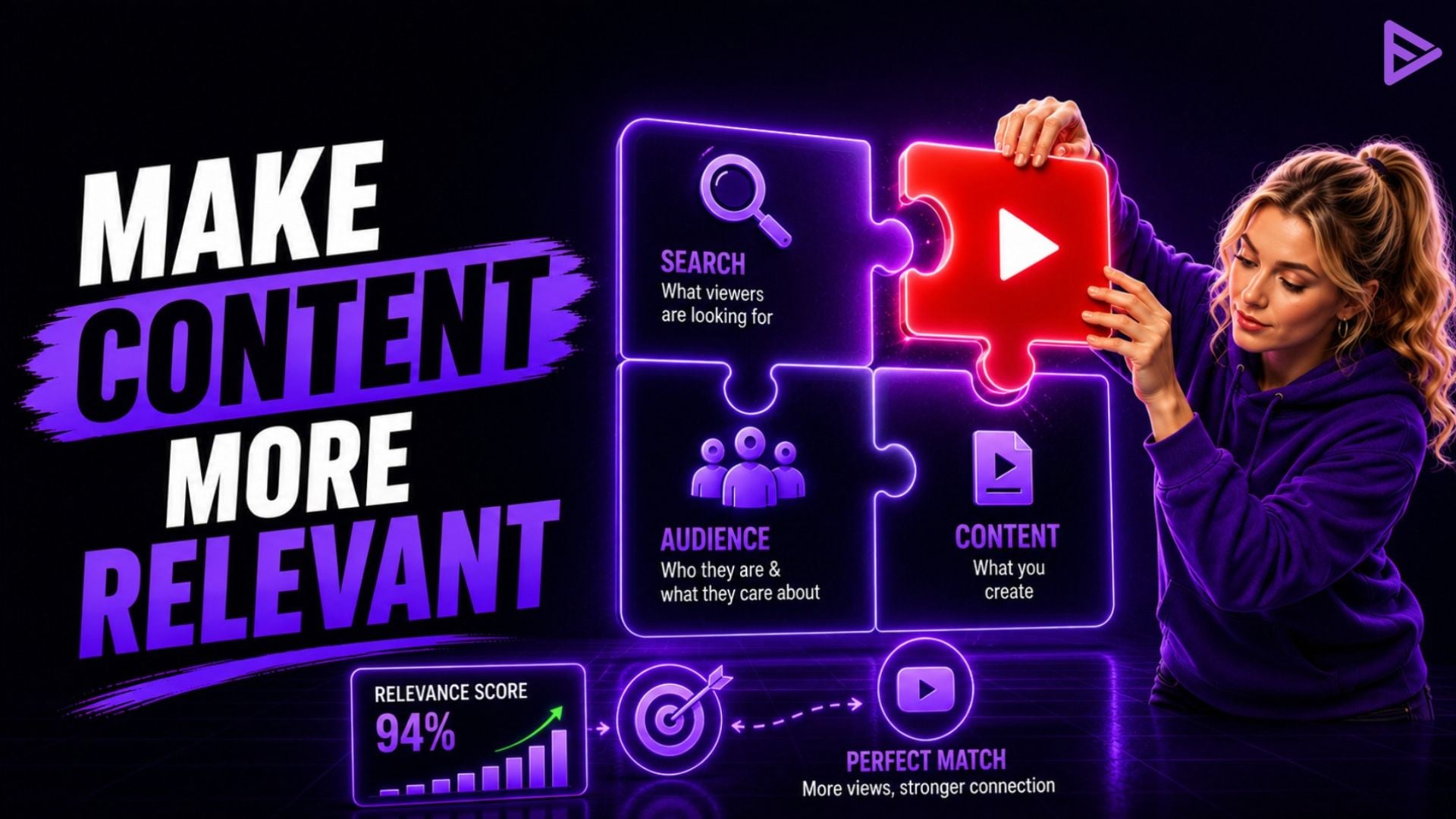
- Relevance is determined by the titles, descriptions, tags, and content of the videos.
- After a video is discovered, other factors that influence YouTube search ranking are viewer behaviors.
- Tags play a much smaller role when compared with titles, thumbnails and descriptions.
- The search intention should influence not only your video topic, but also its structure.
- Relevance engineering is satisfying viewers, not repeating keywords.
- VeeFly’s YouTube SEO feature enables creators to optimize their video titles, descriptions, tags, and thumbnails.
How to Improve YouTube Rankings With Relevance Engineering
Relevance engineering is the practice of fine-tuning your YouTube topic, title, description, spoken content, thumbnail, and viewer experience to target a particular search intent. YouTube says Search looks at relevance, engagement and quality, and recommendations also consider viewer personalization and content performance. YouTube states that Search looks at how well the title, tags, description, and video content match a viewer’s query, as well as engagement and quality.
What Are the YouTube Ranking Factors In 2026?
The key YouTube ranking factors 2026 creators should understand are relevance, engagement, quality, personalization, and content performance. YouTube does not disclose a single fixed formula, and overrides vary by surface (Search, Home, Suggested Videos) and region.
Relevance, engagement, and quality are especially important for YouTube Search. Recommendations are based on viewer personalization and performance.
This, when translated, gives us the following YouTube video ranking factors framework:
Search intent + relevance + viewer response + quality + personalization
Creators should therefore avoid outdated advice that focuses on one supposed algorithm signal.
How Does Search Intent Improve YouTube Search Ranking?
Search intent enhances YouTube search ranking by allowing creators to respond to what their audiences want to do. Simply matching a keyword is not sufficient; the video must answer the question that lies beneath that query.
Consider these searches:
- “YouTube thumbnail size” → specification
- “How to make a YouTube thumbnail” → tutorial
- “Best YouTube thumbnail tips” → strategy
Then share a topic, but have a different intent. Identify whether the query is informational, instructional, comparative, problem-solving, or navigational before making a video. Then build the video around that intent.
Do Tags Still Matter for YouTube SEO?
YouTube Tags are a very minor part of the equation when it comes to YouTube SEO, and they should only be used to cover common spelling mistakes and not much else. YouTube says titles, thumbnails and descriptions are the most important discovery-related metadata.
Creators should therefore prioritize:
- Search intent
- Relevant topic
- Accurate title
- Useful description
- Strong thumbnail
- Helpful content
- Viewer satisfaction
This is more effective than spending excessive time creating large tag lists.
How Do You Push Up The Ranking Of A YouTube Video?
You can make the YouTube video ranking factors work for you, but you’ve got to make the entire journey to the viewer consistent from the search query and the thumbnail to the first 10 seconds of your content and the final payoff. The viewer should have no doubt that the video meets their need, right away.
Use this framework:
Search query → title → thumbnail → opening → answer → payoff → next relevant video
If the title promises a tutorial but the first minute of the video is dedicated to something else, it reduces the relevance of the experience. YouTube’s current guidance emphasizes delivering value quickly and using audience retention data to understand viewer response.
“We’re trying to understand not just about the viewer’s behavior and what they do, but how they feel about the time they’re spending.”
— Todd Beaupré, Senior Director of Growth and Discovery, YouTube
The takeaway is simple: optimize for the viewer’s need first, then use SEO to make that value easier to discover.
What Are The Most Critical YouTube SEO Ranking Factors?
The best YouTube SEO ranking factors are those that effectively connect the search relevance and user satisfaction aspects of the YouTube algorithm, such as topic relevancy, metadata, content quality and user response. The core Search criteria that YouTube focuses on are relevance, engagement, and quality.
|
Optimization area |
Relevance engineering approach |
| Keyword | Identify the viewer’s actual question |
| Title | Clearly state the topic and outcome |
| Thumbnail | Reinforce the video’s promise |
| Description | Explain the topic naturally |
| Video | Answer the query directly |
| Opening | Confirm the viewer made the right choice |
| Retention | Identify where viewers leave |
| Related content | Offer a logical next video |
What Are the YouTube Algorithm Ranking Factors?
YouTube algorithm ranking factors are different for each platform surface, so there is no single solution for Search, Home, Suggested Videos, and Shorts. Search is heavily weighted by relevance, while recommendations include personalization and content performance. YouTube adds that topic interest, competition, and seasonality also play a role in how many viewers a video gets. A better strategy is to know your viewer, produce content that is extremely relevant to them, and see how they respond.
Final Thoughts
Enhancing YouTube rankings in 2026 does not rely heavily on finding hidden algorithm magic, but rather progresses through building relevance among the viewer, search term, video, and the experience itself. Presently, YouTube articulates its search recommendations through three pillars: relevance, engagement, and quality. Recommendations include personalization and performance signals.
The leading YouTube ranking factors function in combination. A relevant theme matches the search intent. A clear title explains the value. A good video provides the promised benefit. A good response from the viewers proves that it was worth watching.
The main idea of relevance engineering is that it is not about optimizing for a keyword, but rather about a real person making a search. VeeFly’s YouTube SEO tools can help creators optimize videos by creating titles, descriptions, thumbnails, and many other important aspects.
Frequently Asked Questions
Q1. What factors influence YouTube ranking the most?
YouTube Search is based on three factors: relevance, engagement, and quality. Recommendations also factor in personalization and how well the content is performing.
Q2. How do you rank on YouTube search?
Along with engagement and quality, YouTube also assesses how well a video’s title, description, tags, and video itself align with a viewer’s search query.
Q3. What are the top YouTube SEO Ranking factors?
Consider search intent, related titles and descriptions, legitimate content, well-packaged content, and viewer reactions. Tags are less important.
Q4. What are the ranking factors of the YouTube algorithm?
They differ according to the YouTube surface. Different signals may be used for Search, Home, Suggested Videos, and Shorts, with personalization playing an important role in recommendations.
